
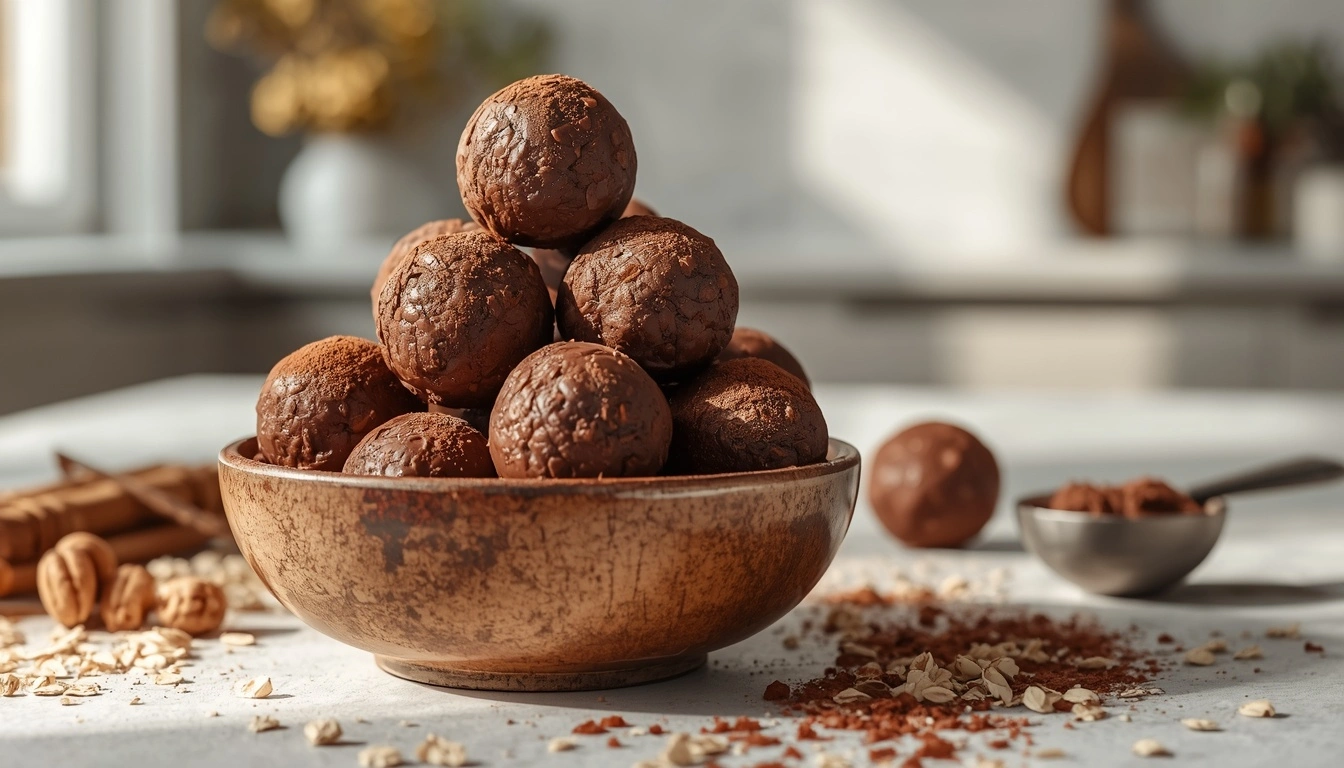
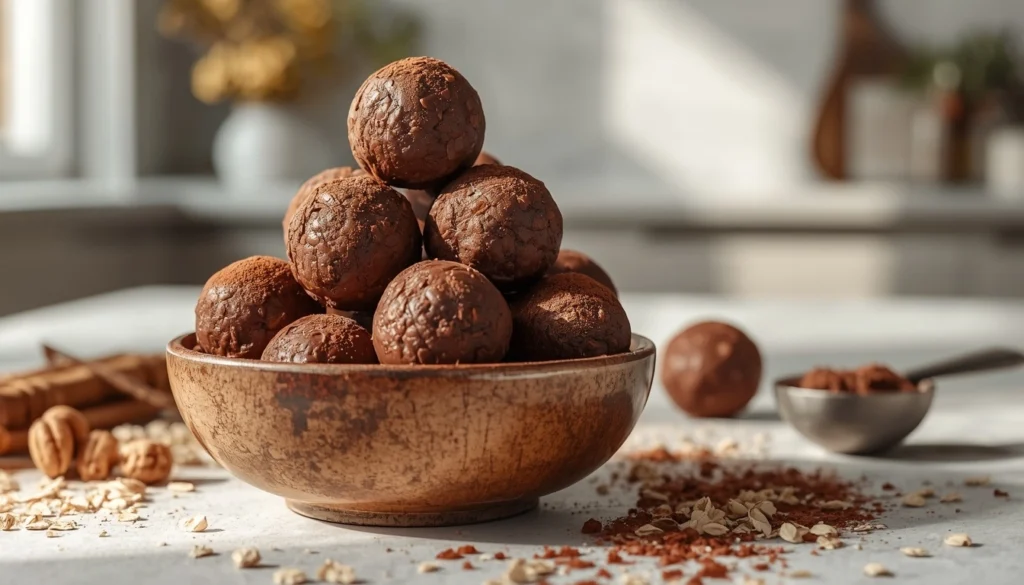
Chocolate Protein Energy Balls (No-Bake, Weight-Loss Friendly)
There’s a specific kind of tired that hits when every “healthy” snack starts tasting the same — another handful of plain oats, another smoothie that’s fine but forgettable. Some days you don’t want something that tastes healthy. You want something that actually feels like a treat, chocolate and all, without spending the next hour negotiating with yourself about whether you should’ve had it.
That’s the gap these fill. They’re rich, chocolatey, and genuinely taste like a dessert — but instead of triggering another round of cravings twenty minutes later, they actually shut them down. I found that out almost by accident, expecting a slightly-too-healthy protein snack and getting something closer to a bite of fudge that happened to also keep me full.
The best part is how little it takes. One or two of these and the craving is fully handled — no bag of cookies required, no feeling like you “gave in.” It’s the rare snack that lets you have the chocolate and still stay on track. Here’s exactly how I make them.
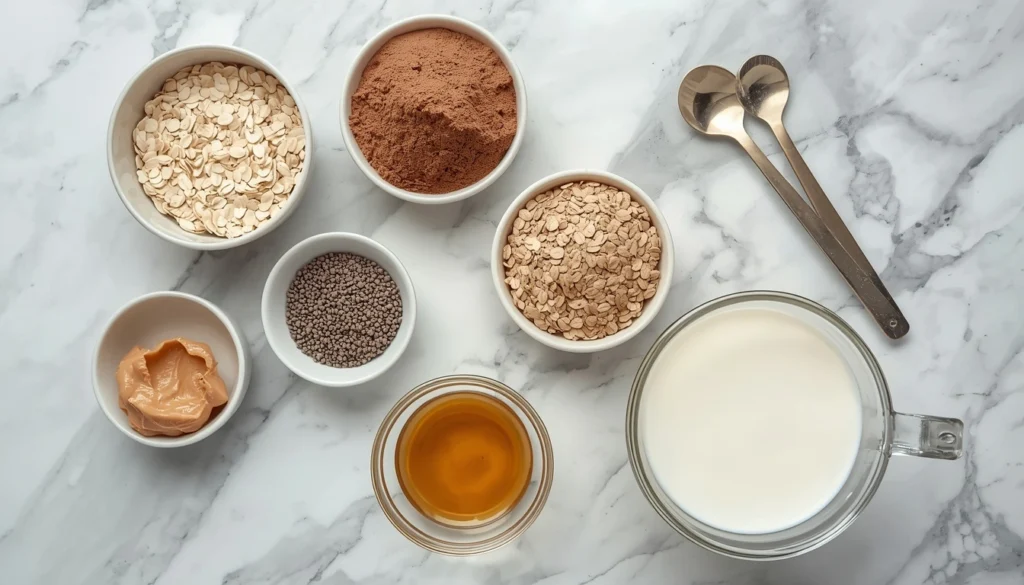
What You’ll Need (makes ~10–12 balls)
- 100g oats
- 30g protein powder
- 2 tablespoons almond butter or peanut butter (~30g)
- 1 tablespoon cocoa powder (~10g)
- 1 tablespoon honey (~15g) — keep it light if you’re watching calories
- 1 tablespoon chia seeds (~10g)
- 2–4 tablespoons milk (to adjust texture)
How to Make Them
1. Get everything measured out first.
Have your oats, protein powder, cocoa powder, chia seeds, nut butter, and honey all ready before you start mixing — these come together fast once you begin, and prepping ahead keeps the process smooth instead of rushed. Every ingredient here is doing a job: oats add body, protein powder brings satiety, nut butter creates that creamy hold, cocoa delivers the chocolate flavor, chia seeds add texture and fullness, and honey rounds it all out with just enough sweetness.
2. Mix the dry ingredients first.
In a medium bowl, combine the oats, protein powder, cocoa powder, and chia seeds before adding anything wet. This step is small but matters — it keeps the cocoa and protein powder from clumping later, so every bite ends up with the same flavor and texture. It’ll look dry and loose right now, and that’s exactly how it should look at this stage.
3. Add the nut butter and honey,
then bring it together. Stir in the almond or peanut butter and the honey. It’ll seem too dry at first — that’s normal, keep stirring. The nut butter gradually coats the oats and the honey helps everything compact into something thicker and slightly sticky. If it’s still too crumbly after a minute of mixing, add water or milk one tablespoon at a time until it holds together when pressed between your fingers, without turning wet or runny. Getting this texture right is what determines whether the balls hold their shape later.
4. Roll into balls.
Take a small amount and roll it gently between your palms — smaller sizes work well here since they feel more like a controlled snack than an all-you-can-eat treat. If they crack apart, the mix is too dry (add a splash more liquid); if they feel slippery, it’s a touch too wet (a few more oats fixes it).
5. Chill until set.
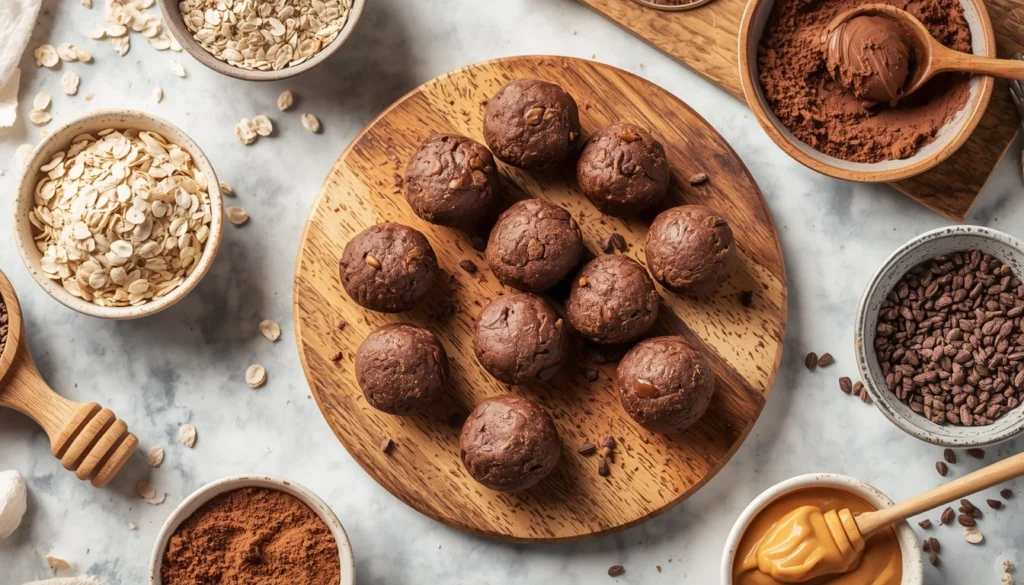
Refrigerate for 20–30 minutes. It’s tempting to eat them right away, but this step is what turns them from sticky dough into a genuinely finished snack — the oats and chia seeds absorb a bit more moisture, the texture firms up, and the chocolate flavor deepens.
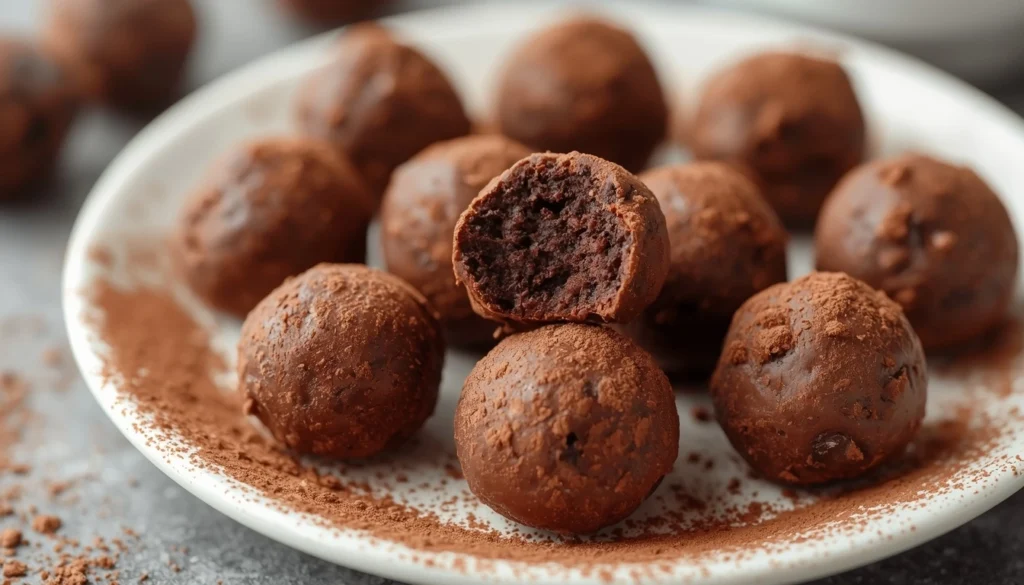
Nutrition
Total recipe (approx.): 550–600 kcal · 35–40g protein · 55–65g carbohydrates · 20–25g fat · 10–12g fiber
Per ball (~12 balls): 45–50 kcal · ~3g protein · 4–5g carbohydrates · 1.5–2g fat · ~1g fiber
Why These Actually Support the Goal, Not Just the Craving
Seeing “550–600 calories” for a full batch might look like a lot on paper, but the math only matters if you’re eating the whole thing in one sitting — and you’re not. One or two balls lands you at roughly 50–100 calories, which is a completely normal snack. What makes them worth it isn’t the calorie count anyway, it’s how satisfying they are relative to it. Between the protein, fiber, and a bit of fat, they keep you full in a way a cookie or a chocolate bar never quite manages.
That’s the actual mechanism behind why these help rather than hurt a weight-loss goal: they prevent the second and third snack you’d otherwise reach for. A “light” snack that doesn’t satisfy you just pushes the real eating to twenty minutes later, and that’s usually where extra calories sneak in unnoticed. These stop that cycle before it starts — and because they still taste like a genuine treat, they don’t leave you feeling restricted, which is often the actual reason people fall off a healthy routine in the first place.
If your sweet cravings keep undoing your progress, this is worth keeping in the fridge. It’s not about eating “perfectly” — it’s about having something ready that actually satisfies the craving instead of just delaying it.


