
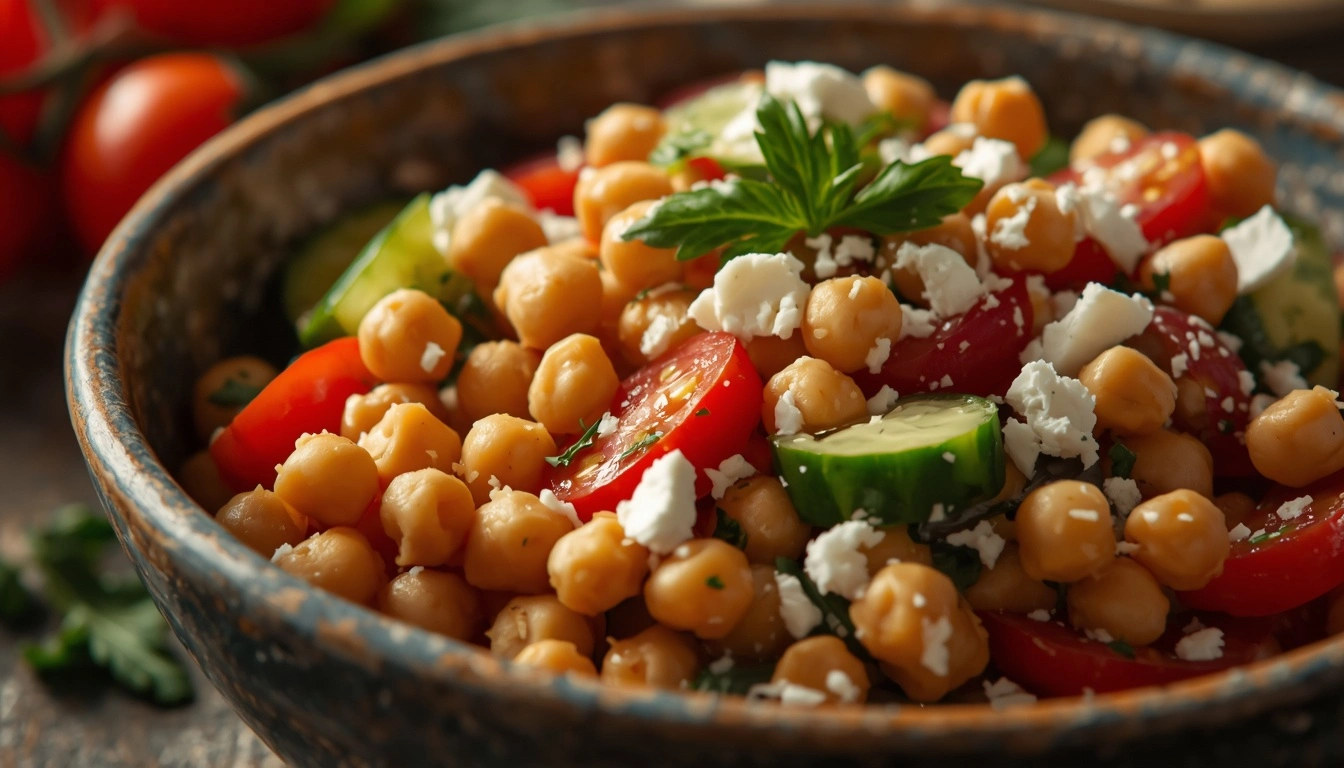
Healthy Chickpea Salad Recipe | Fresh Mediterranean Lunch
For a long time, my idea of a weight-loss-friendly meal was some version of sad and bland — steamed vegetables, maybe a plain protein, nothing that actually made me want to eat it. I stuck with those meals out of obligation, not enjoyment, which is exactly why they never lasted long.
This chickpea salad is what changed that. Crisp cucumber, cherry tomatoes, red pepper, a little feta, and a bright lemon-vinegar dressing, all built around chickpeas as the base. I wasn’t expecting a “diet salad” to actually taste this good — vibrant, tangy, genuinely satisfying, with enough texture and flavor that it didn’t feel like something I was settling for.
It’s become the meal I reach for on busy days when cooking feels like too much, or whenever I want something that actually supports my goals without tasting like a compromise. Here’s exactly how I make it.

What You’ll Need (1–2 servings)
- 120g chickpeas, drained and rinsed
- 150g cucumber, diced
- 150g cherry tomatoes, halved
- 80g red bell pepper, chopped
- 40g red onion, finely chopped
- 10–15g fresh parsley, chopped
- 40g light feta cheese, crumbled
- 1 teaspoon (5ml) olive oil
- Juice of ½ lemon
- 1 tablespoon vinegar (apple cider or white wine)
- 1 small garlic clove, minced
- Salt and pepper, to taste

How to Make It
1. Set up your workspace.
Before cutting anything, lay out all your ingredients so you can see everything clearly — it keeps the whole process calmer. Grab a large mixing bowl, a small bowl for the dressing, a cutting board, and a sharp knife. Rinse all the vegetables under cold water, even if they look clean, to remove any lingering dirt.
2. Prep the chickpeas.
Rinse the chickpeas thoroughly under cold water for 20–30 seconds to remove excess salt and improve the flavor. Let them drain well, then add them to your large mixing bowl — this is the base your salad builds on.
3. Chop the vegetables.
Take your time here, since this is what defines the salad’s texture. Dice the cucumber into small, even cubes. Halve the cherry tomatoes (quartering any larger ones). Remove the seeds from the red bell pepper and chop it to a similar size as the cucumber. Slice the red onion very finely so it blends in without overpowering anything. Finely chop the parsley last. Add everything to the bowl with the chickpeas.
4. Mix the base.
Gently combine everything with a large spoon, making sure the chickpeas and vegetables distribute evenly. You’ll notice how colorful and fresh it already looks — that’s a good sign your proportions are right.

5. Make the dressing.
In a small bowl, combine the olive oil, lemon juice, vinegar, minced garlic, a pinch of salt, and some black pepper. Stir slowly until it turns into a glossy, slightly creamy dressing. Taste it — it should feel fresh and tangy, not sharp. If it’s too strong, soften it with a small splash of water or a few extra drops of olive oil.
6. Combine.
Pour the dressing evenly over the salad and mix gently, working from the bottom up so it spreads throughout without mashing the chickpeas or crushing the tomatoes.
7. Add the feta.
Crumble the feta over the top and fold it in gently rather than stirring hard — you want small, creamy chunks scattered throughout, not fully broken apart.
8. Let it rest.
Give the salad 5–10 minutes before eating (or longer in the fridge, if you have time). This lets the chickpeas and vegetables soak up the dressing, and the flavors settle into each other.

Nutrition per serving
(1 of 2): ~280 kcal · 11g protein · 32g carbohydrates (7g sugars) · 11g fat · 9g fiber
Why This One Actually Works for Weight Loss
The reason this salad supports the goal without feeling restrictive comes down to volume and balance. The vegetables add real bulk, which is what actually makes you feel full, while the chickpeas provide steady, slow-releasing energy rather than a quick spike and crash. The lighter dressing and reduced fat keep the calories in check without stripping out the flavor that makes you want to actually finish the bowl.
It’s also genuinely flexible — add more protein on a hungrier day, keep it as-is when you want something lighter, or prep it ahead for the next day’s lunch. That kind of adaptability is often what separates a meal you eat once and abandon from one that becomes an actual habit.
If your healthy meals have started to feel like something you tolerate rather than enjoy, this is worth adding into rotation — proof that eating well and actually liking your food aren’t mutually exclusive.

