
Easy Oven Baked Salmon Recipe | Healthy High Protein Dinner
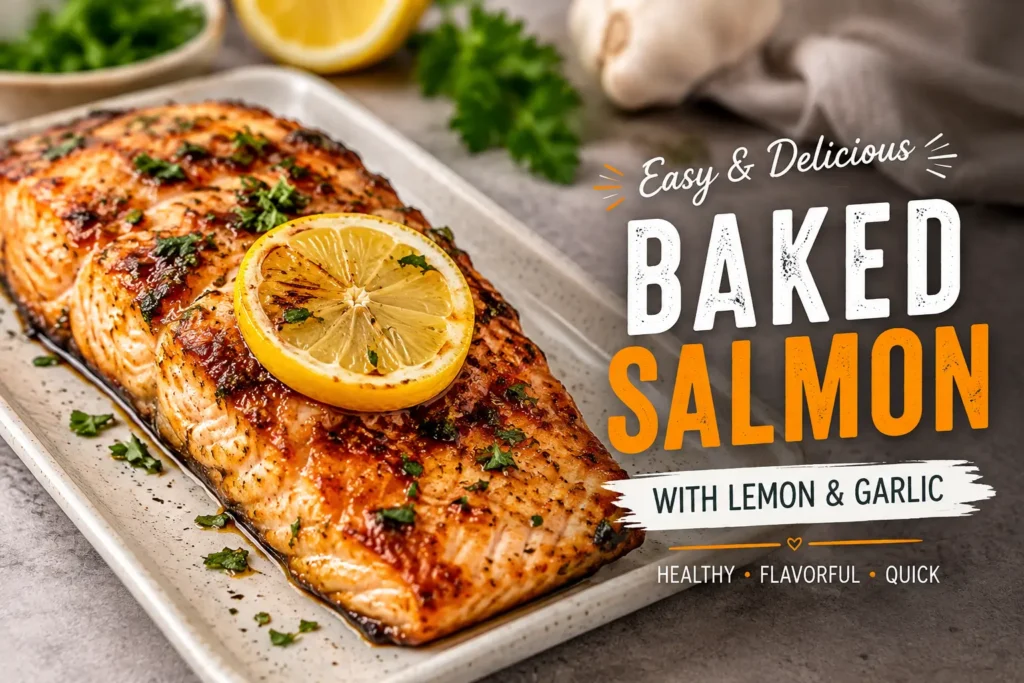
There’s a specific kind of tired that hits right around dinnertime — hungry, out of ideas, standing in front of the fridge hoping something will figure itself out. This salmon recipe is what solved that for me more consistently than almost anything else in my rotation. It looks like something you’d order at a nice restaurant, but it takes barely any real effort.
That’s the strange part about salmon — it rewards simplicity. Good seasoning, a hot oven, and a few minutes is genuinely all it needs. Overcomplicating it is usually what ruins it, not the other way around.
Here’s exactly how I make it.
What You’ll Need
For the salmon:
- 2 pounds salmon fillet
- 2 tablespoons olive oil
- 1 teaspoon salt
- ½ teaspoon black pepper
- 1 teaspoon paprika
- 1 teaspoon garlic powder
- 1 tablespoon minced garlic
- Juice of 1 lemon
- 1 tablespoon chopped parsley
- Lemon slices, for garnish
Optional flavor boosters:
- 1 tablespoon soy sauce
- 1 tablespoon brown sugar
- 1 teaspoon dried thyme
- 1 teaspoon dried oregano
How to Make It
1. Preheat the oven.
Set your oven to 400°F (200°C) and let it fully heat before the salmon goes in — an underheated oven is a common reason salmon ends up cooking unevenly. Line a baking sheet with parchment paper or foil; it makes cleanup considerably easier.
2. Prep the salmon.
Pat the fillet dry with paper towels — this step gets skipped often, but it shouldn’t be. Removing excess surface moisture helps the seasoning actually stick and improves the final texture. Place the salmon skin-side down on your prepared tray.
3. Make the flavor mixture.
In a small bowl, combine the olive oil, lemon juice, minced garlic, garlic powder, paprika, salt, and pepper, mixing thoroughly. Brush or spoon it evenly over the entire fillet, making sure the edges get coated too — not just the center.
4. Add the garnishes.
Scatter the chopped parsley over the top and lay a few lemon slices across the fillet. At this point the kitchen already smells like something worth waiting for.
5. Bake.
Bake for 12–15 minutes, adjusting slightly for thickness — thicker fillets need a touch more time. You’ll know it’s done when the salmon flakes easily with a fork but the center still looks moist. Don’t chase a perfectly uniform color; chase tenderness.
6. Rest and serve.
Let the salmon rest for 3–5 minutes before serving — this short pause lets the juices redistribute through the fish, which makes a real difference in the final texture.
Flavor Variations Worth Trying
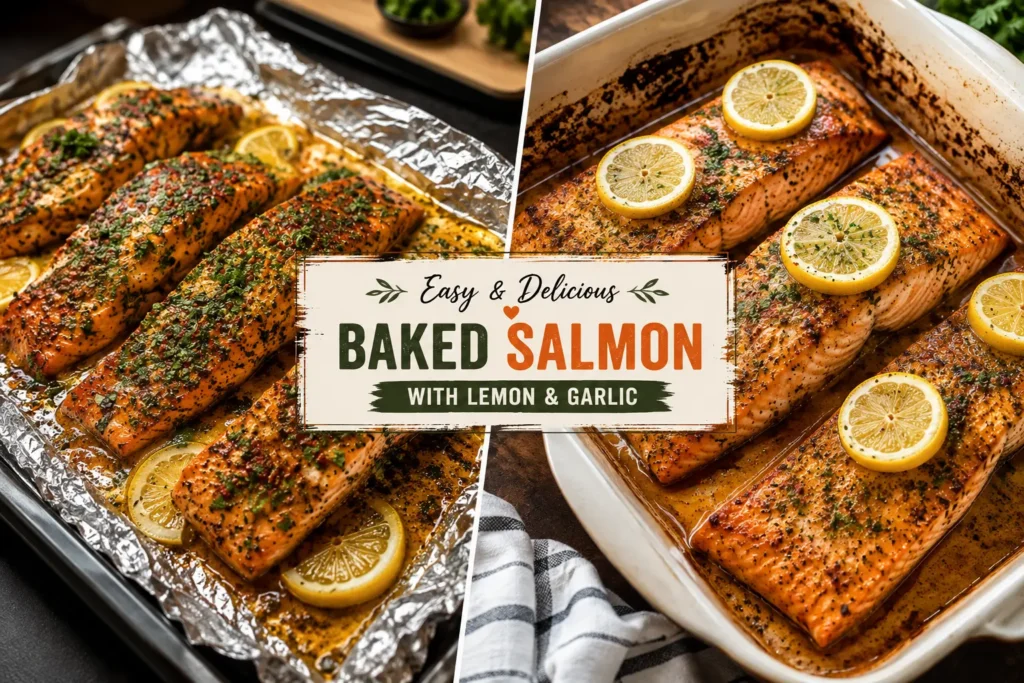
Lemon version:
Increase the lemon juice slightly and add extra lemon slices on top before baking. Fresh dill works beautifully here too — the citrus balances the fish’s richness for a genuinely refreshing finish.
Garlic version:
Bump the minced garlic up to 2 tablespoons and scatter a few whole roasted garlic cloves around the tray. The result is deeper and more aromatic — the kind of dinner that makes your kitchen smell incredible from two rooms away.
Brown sugar version:
Combine 1 tablespoon brown sugar with 1 tablespoon olive oil, garlic, and lemon juice, then spread it over the salmon before baking. It’s not overly sweet — just enough to create a light caramelized surface that pairs surprisingly well with the richness of the fish.
Soy sauce version:
Mix 1 tablespoon soy sauce with olive oil, garlic, and lemon juice for a savory, umami-forward take. A small addition, but it noticeably deepens the overall flavor.
Herb version:
Combine parsley, dill, thyme, and oregano with fresh lemon slices. As it bakes, the herbs release their oils into the fish, giving you something that tastes fresh, clean, and a little more sophisticated without any extra effort.
One-pan version with asparagus:
Arrange trimmed asparagus around the salmon before baking, drizzle everything with olive oil, and season with salt and pepper. Everything cooks together — one pan, one cleanup, a complete dinner.
How to Know When It’s Done
Look for these signs: the flesh flakes easily with a fork, the center still looks moist rather than dry, the color shifts from translucent to opaque, and the internal temperature reads 145°F (63°C). Salmon keeps cooking slightly even after it leaves the oven, so pulling it a minute early is usually a safer bet than leaving it in too long.
If you’re looking for another easy high-protein dinner, my 20-Minute Miso Sesame Chicken Bowl is a great weeknight option with fresh vegetables and a flavorful homemade dressing. And if you’re firing up the grill instead, my Juicy BBQ Grilled Pork Chops are another family favorite that comes out tender and smoky every time.
What to Serve With It
Salmon pairs well with almost anything — roasted or garlic mashed potatoes, brown rice, wild rice, quinoa, steamed broccoli or green beans, a simple garden salad, or a mix of Mediterranean vegetables. For a comforting vegetable side, try my Cheesy Yellow Squash Casserole Recipe. It’s a creamy, cheesy family-friendly side dish that pairs especially well with tender baked salmon and makes an easy dinner feel more complete.
If you’re looking for another comforting family dinner, try my Ham and Potato Casserole Recipe. Creamy potatoes, tender ham, and melted cheddar come together in an easy baked casserole that’s perfect for busy weeknights, family dinners, or using up leftover ham.
A Few Common Questions
Can I use frozen salmon? Yes — just thaw it completely and pat it dry before seasoning.
Should I leave the skin on? Yes, it helps protect the fish from overcooking, and you can always remove it after baking if you’d rather not eat it.
Can I meal prep this? Definitely. Cooked salmon keeps well in the fridge for up to three days and works great in salads, rice bowls, or wraps.
What’s the best salmon to buy? Wild-caught is often preferred for flavor and texture, though good farm-raised salmon holds up well too — just look for fillets that look moist and vibrant.
Why This One Actually Sticks
What makes this recipe worth keeping in permanent rotation isn’t just how easy it is — it’s the confidence it builds. Once you see how little effort it takes to turn a few simple ingredients into something that tastes genuinely impressive, dinner stops feeling like a daily hurdle. The real trick isn’t any specific seasoning combination — it’s realizing that a simple method, executed well, usually beats a complicated one.
Make it once this week, then start adjusting — a different citrus, a bolder herb mix, whatever sounds good. That’s usually how a simple recipe turns into the one people keep asking you to make again.