Kuaishou Chinese Version vs International – Complete Comparison
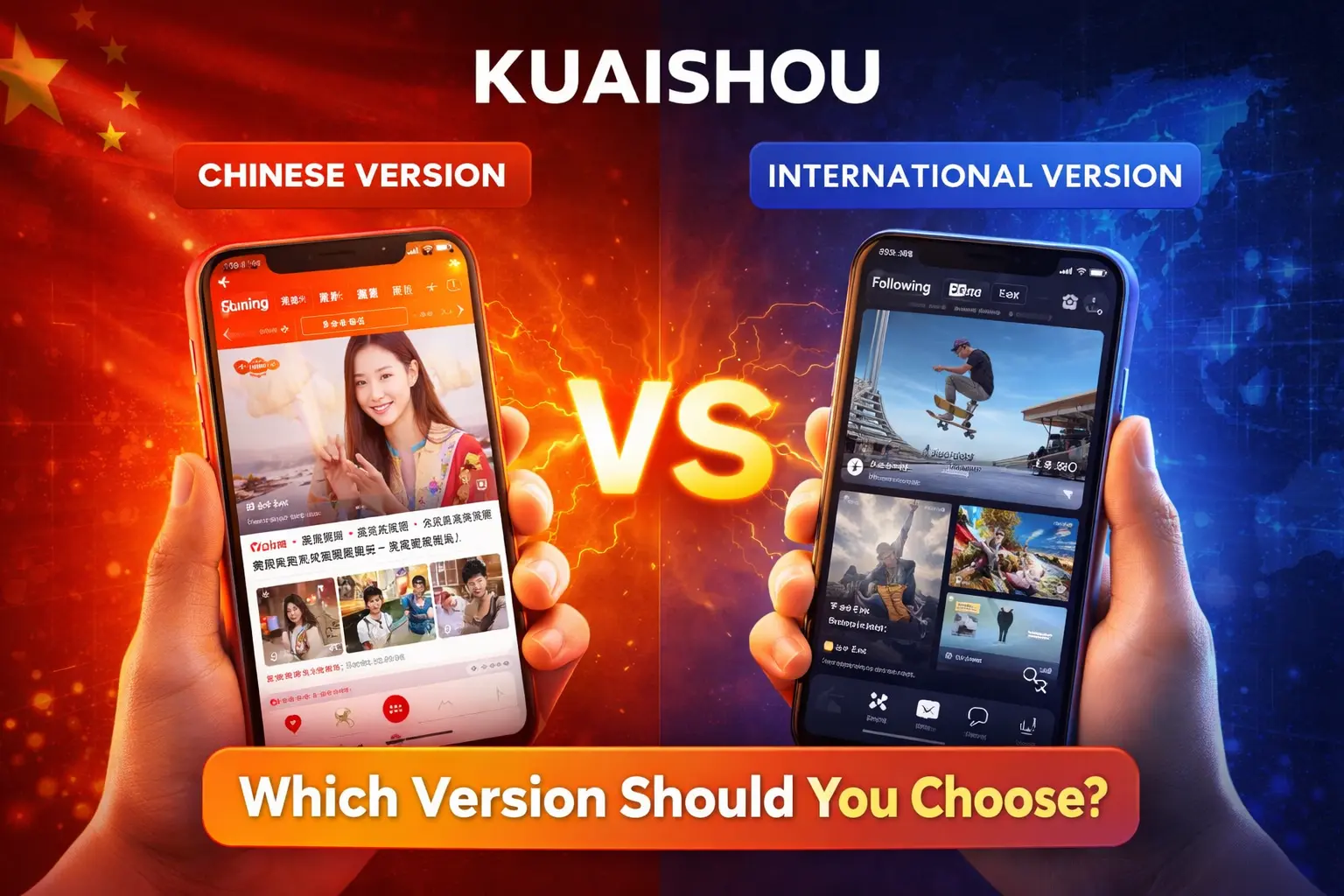
Many users get confused between the Chinese version of Kuaishou and the international version called Kwai. Although both apps are owned by the same company, they work differently depending on your region, language, and content preferences.
The Chinese version (快手) focuses mainly on users inside mainland China and includes advanced features, Chinese-language content, and deeper social commerce tools. Kwai, on the other hand, is designed for international audiences with multilingual support and easier access outside China.
This guide compares both versions side-by-side so you can decide which one is better for your device, location, and content goals. Understanding these differences helps users make informed decisions about Chinese Kuaishou download versus international access. While both apps share the same parent company, Beijing Kuaishou Technology, the 快手下载 (Chinese version) offers deeper integration with Chinese social media, advanced AI features, and a mature creator ecosystem, whereas Kwai focuses on international accessibility and localized content for global audiences.
Understanding the Two Versions
What is Kuaishou Chinese Version (快手)?
Kuaishou, written as 快手 in Chinese characters and literally meaning “quick hand,” represents the original platform launched in 2011 by Beijing Kuaishou Technology Co., Ltd. AI-based video generation tools dominates the domestic market with millions of active users across China primarily within mainland China. This version receives priority for new feature development, with innovations like new AI-powered editing and recommendation features appearing here first before international rollout. The app deeply integrates with Chinese digital infrastructure including WeChat and QQ login systems, Alipay and WeChat Pay for transactions, and popular Chinese social platforms for content sharing.
The original app provides maintains package name com.smile.gifmaker and operates exclusively through Chinese servers located in Beijing and other mainland facilities. Content moderation follows Chinese regulations, with heavy emphasis on positive social values and compliance with local internet governance. The platform’s personalized recommendation system has been refined over a decade serving the Chinese market, making content discovery particularly effective for users interested in Chinese language content, mainland culture, and China-specific trends.
What is Kwai International?
Kwai emerged as Beijing Kuaishou Technology’s international expansion strategy, launching in markets outside China with localized features and content. The international version uses package name com.kwai.video and targets users across Southeast Asia, South Asia, Latin America, Africa, and other emerging markets. Unlike its Chinese counterpart, Kwai operates on international servers with data centers distributed globally to ensure regional compliance and faster content delivery.
The international version simplifies many features to accommodate diverse markets with varying internet infrastructure quality. Language support extends across dozens of options including English, Spanish, Portuguese, Hindi, Indonesian, and Arabic, though Chinese language support exists but isn’t the primary focus. Content moderation follows international standards and regional laws, varying significantly from Chinese domestic policies. The app integrates with Google services, Facebook accounts, and international payment systems rather than Chinese-specific platforms.
Same Company, Different Markets
Beijing Kuaishou Technology operates both platforms as separate products targeting distinct demographics. Many users think they are completely different apps, but they are actually regional versions of the same platform. Read our full breakdown of Kuaishou vs Kwai here. The original app providesfocuses exclusively on the massive domestic market where it competes with Douyin (TikTok’s Chinese version), Bilibili, and other local platforms. The company invests heavily in maintaining its competitive position within China, resulting in The original app provides receiving cutting-edge features, substantial computational resources, and priority development attention.
The international version serves as the company’s global expansion vehicle, competing with TikTok, Instagram Reels, YouTube Shorts, and regional competitors across different markets. Resource allocation differs significantly, with the mainland release includes. benefiting from the company’s primary revenue streams and development focus. This creates a noticeable gap in feature richness, AI capabilities, and overall sophistication between the two versions, though Kwai continues receiving updates and improvements tailored to international user preferences.
Key Differences Between Versions
Package Names & App Identity
The technical identities of both versions differ fundamentally at the package level. The Kuaishou Chinese version uses com.smile.gifmaker as its Android package identifier, a name carrying historical significance from the app’s early days as a GIF creation tool before evolving into a comprehensive short-video platform. This package name remains unchanged across all Chinese releases, ensuring continuity for existing users. iOS uses a corresponding bundle identifier for App Store distribution within China.
Kwai International operates under com.kwai.video, clearly distinguishing it from The mainland release includes. at the system level. This separate package identity means both apps can technically coexist on the same device without conflict, though practical use of both simultaneously proves challenging due to separate accounts, different content libraries, and distinct recommendation algorithms. The package difference also affects update channels, with each version receiving updates through different distribution systems optimized for their respective markets.
User Interface Language
The mainland release includes. mainly uses simplified Chinese (简体中文), with limited support for English and traditional Chinese.
Although some menus can appear in English, many advanced settings, creator tools, and community features still remain partially untranslated. This can make navigation difficult for users who do not understand Chinese.
Kwai International is much easier for global users because it supports multiple languages including English, Spanish, Portuguese, Hindi, Indonesian, and Arabic.
Content & Creator Focus
Content ecosystems diverge dramatically between versions. The Chinese Kuaishou download provides access to an enormous library of mainland Chinese content spanning entertainment, education, commerce, lifestyle, and countless niche categories. Popular content types include Chinese comedy sketches, Mandarin and dialect music covers, Chinese regional cuisine, domestic travel within China, Chinese social commentary, and cultural content deeply rooted in Chinese society. The creator community consists primarily of Chinese nationals producing content for Chinese audiences, with sophisticated monetization systems tied to Chinese payment platforms and e-commerce integration with Taobao, JD.com, and other Chinese marketplaces.
Kwai International curates globally diverse content with regional customization based on user location. Users in Indonesia see Indonesian creators, those in Brazil encounter Portuguese content, and Indian users discover Hindi, Tamil, and other regional language videos. While some Chinese content appears in international feeds, the algorithm prioritizes locally relevant material. Creator communities develop independently in each region, with monetization options adapted to local payment systems and regional e-commerce platforms. The content style tends toward more international trends rather than China-specific cultural references.
Feature Availability Comparison
The mainland release includes. consistently leads in feature sophistication and availability. Kling AI 3.0, the revolutionary AI video generation system producing 15-second videos from text prompts with multilingual audio, launched exclusively on the Chinese version before any international rollout. Advanced e-commerce features including integrated live shopping, seller dashboards, inventory management tools, and comprehensive analytics suites exist primarily or exclusively in the Chinese version. Social commerce integration goes deeper, with direct connections to major Chinese e-commerce platforms enabling seamless purchasing within the app.
Advanced editing tools show similar disparity. The mainland release includes. offers over 100 effects and filters compared to Kwai’s more limited selection, often with newer effects appearing months earlier on the Chinese platform. Professional-grade video editing capabilities, sophisticated audio mixing tools, and advanced live streaming features like multi-camera support and professional-grade broadcasting tools receive priority development for the Chinese market. The international version provides solid core functionality but typically operates 3-6 months behind the original app provides for major feature releases.
Can You Use Both Versions on One Phone?
Yes. Since both apps use different package names, Android users can install both the Chinese version of Kuaishou and Kwai International on the same device.
However, there are a few limitations:
- Separate accounts are required
- Content does not sync between apps
- Notifications can become overwhelming
- Storage usage increases significantly
Most users usually choose one version based on their language and target audience.
Chinese Kuaishou Download Methods
Download from Chinese App Stores
Accessing 快手下载 (Chinese Kuaishou download) through official channels requires interaction with Chinese app distribution platforms. The primary method involves Chinese Android app stores including Tencent Yingyongbao (Tencent App Store), Huawei AppGallery for Huawei devices, Xiaomi GetApps for Xiaomi phones, Oppo Software Store, and Vivo App Store. Each major Chinese phone manufacturer operates their own app store, and Kuaishou appears prominently in all of them given its market position.
Users with Chinese-branded smartphones typically find Kuaishou pre-installed or featured prominently in the default app store. For international users attempting to access the Chinese version, downloading from these stores requires navigating Chinese-language interfaces, creating Chinese accounts (often requiring Chinese phone number verification), and understanding Chinese app store navigation systems. The benefit of using official Chinese stores includes automatic updates, verified authentic versions, and integration with the broader Chinese app ecosystem.
APK Download for International Users
International users seeking the Kuaishou Chinese version without Chinese phone numbers or app store access can utilize APK sideloading. Trusted sources for authentic Chinese version APKs include APKMirror.com, APKPure.com (which maintains separate listings for Chinese and international versions), and Uptodown.com, though If the latest update causes issues, you can safely download previous Kuaishou versions from our archive. users must carefully verify they’re downloading the Chinese version (com.smile.gifmaker) rather than Kwai. The APK file size typically reaches 100-110MB for recent versions, larger than Kwai due to additional features and resources.
After downloading the APK, installation requires enabling Unknown Sources in Android security settings. Users should verify the package name shows com.smile.gifmaker after installation to confirm they have the authentic Chinese version. This method bypasses Chinese app store requirements but means sacrificing automatic updates and needing to manually download new APKs for each update. Security considerations become important as sideloaded apps lack the verification provided by official stores, making source trustworthiness critical.
iOS Download Requirements
Accessing the Chinese version on iPhone or iPad presents greater challenges due to Apple’s strict App Store regionalization. The Chinese version exists exclusively in the Chinese App Store, unavailable in other regional stores including US, European, or other international App Stores. Downloading requires a Chinese Apple ID, which necessitates a Chinese phone number for verification, a Chinese billing address, and often requires a Chinese payment method (though some apps can be downloaded without payment information).
Creating a Chinese Apple ID involves navigating Apple’s Chinese-language account creation process, providing Chinese address information (which can be found online but should be legitimate Chinese addresses), and verifying a Chinese phone number through SMS. International users without genuine Chinese phone numbers face significant barriers. Some users resort to purchasing Chinese Apple IDs from online services, though this violates Apple’s terms of service and presents security risks. Once accessed, the Chinese version updates automatically through the Chinese App Store, but switching between Chinese and international Apple IDs requires logging out and back in, a cumbersome process.
International Version (Kwai) Access
Google Play Store Availability
Kwai International maintains presence in Google Play Store across most regions, though availability varies by country based on local regulations and market strategies. Users in Southeast Asia, South Asia, Latin America, and Africa typically find Kwai readily available. Some regions like India face complications due to historical Chinese app restrictions, where Kwai’s availability fluctuates based on regulatory environment. North American and European users may or may not see Kwai in their Play Stores depending on the company’s market priorities in those regions. Want to use Kuaishou on your computer? Follow our complete PC setup guide for Windows and Mac.
Installation through Play Store follows the standard process: search “Kwai” or “Kwai Video”, tap Install, wait for the 80-90MB download to complete, and launch the app. This method provides automatic updates whenever the development team releases new versions, typically every 2-4 weeks for minor updates and monthly for major feature releases. The Play Store version integrates with Google services for account creation, allowing sign-in through Google accounts alongside phone number and email options.
Regional Restrictions
Geographic availability of Kwai varies significantly based on business strategy and regulatory environments. The app operates actively in emerging markets where short-video platforms compete for user attention and the company sees growth potential. Markets receiving the most development attention include Southeast Asian nations (Indonesia, Thailand, Philippines), South Asian countries (Pakistan, Bangladesh, parts of India where accessible), selected African nations, and Latin American markets (Brazil, Mexico). Western markets receive less attention, with Kwai maintaining minimal presence in North America and Europe where competition from TikTok, Instagram, and YouTube proves intense.
Regional restrictions also affect content visibility. A user in Brazil sees dramatically different recommended content compared to someone in Indonesia, as the algorithm tailors suggestions to regional preferences, trending topics, and local creator content. This regionalization ensures relevant experiences but fragments the platform’s global community, making Kwai feel like a collection of regional platforms rather than a unified international network.
Easier Installation Process
The international version significantly simplifies access compared to the Chinese version’s requirements. No Chinese phone number verification, Chinese address information, or navigation of Chinese-language interfaces is necessary. Users can typically install and create accounts using international phone numbers from virtually any country, email addresses from standard providers (Gmail, Outlook, Yahoo), or social media accounts like Facebook or Google for quick registration. The entire process, from Play Store search to active account creation, takes 5-10 minutes compared to potentially hours navigating Chinese version requirements for international users.
Language barriers disappear entirely with professionally translated interfaces available in users’ native languages. Help documentation, tutorial videos, customer support, and community guidelines all operate in multiple languages with quality translations. This accessibility removes the technical and linguistic hurdles that make Chinese version access challenging for non-Chinese speakers, though the tradeoff comes in the form of reduced feature sophistication and access to a different content ecosystem.
Content Quality & Ecosystem
Chinese Version Content Richness
The maturity of the Chinese version’s ecosystem shows in its content depth and creator sophistication. Over a decade of development has cultivated professional creators, talent agencies specializing in short-video content, brand partnerships, and sophisticated content production standards. Many Chinese creators treat Kuaishou as their primary income source, investing in professional equipment, hiring editing teams, and developing consistent content strategies. This professionalization elevates content quality beyond casual user-generated videos to television-quality production in many categories.
Content diversity spans impressive ranges with specialized niches finding substantial audiences. Rural life documentation shows farmers sharing agricultural techniques and countryside experiences, reaching millions of urban Chinese viewers. Educational content covers everything from language learning to professional skills, scientific explanations to historical deep dives. Food content ranges from street vendor showcases to professional chef tutorials to regional cuisine exploration across China’s vast culinary landscape. The sheer volume of daily uploads (millions of videos) combined with China’s massive population creates an ecosystem where even obscure interests find active communities.
International Version Local Content
Kwai’s international content ecosystem develops differently, with growth varying dramatically by region. Some markets like Indonesia and Brazil have developed substantial local creator communities producing region-specific content in local languages. These regional ecosystems function semi-independently, with Indonesian users primarily consuming Indonesian content, Brazilian users watching Portuguese videos, and Pakistani users seeing Urdu content. This fragmentation means each regional market must build its own creator base from scratch rather than inheriting the established Chinese ecosystem.
Content production quality varies widely across international markets. Some regions have embraced professional content creation with creators investing in equipment and developing sophisticated strategies, while other markets remain dominated by casual user content. The international version’s younger ecosystem (launched years after the Chinese version) means fewer established creators, less sophisticated monetization systems, and generally less polished content compared to the mature Chinese platform. However, this also creates opportunities for newer creators to establish themselves without competing against decade-old established accounts.
Creator Communities Comparison
The Chinese version’s creator community operates with sophisticated support systems including talent agencies (MCNs) representing thousands of creators, brand partnership programs connecting creators with advertisers, creator training programs teaching content strategy and production techniques, and advanced analytics dashboards providing detailed performance metrics. Top Chinese creators earn substantial incomes through multiple revenue streams including virtual gifts, brand partnerships, e-commerce integration, and platform creator funds. The competitive environment drives continuous content improvement as creators battle for audience attention.
Kwai’s international creator communities vary by region in maturity and sophistication. Some markets have developed robust creator ecosystems with local MCNs, brand partnerships, and professional creators, while others remain relatively nascent. Monetization options typically lag behind Chinese version capabilities, with fewer revenue streams and less generous creator fund allocations. However, reduced competition in emerging international markets means dedicated creators can build audiences more easily than on the saturated Chinese platform. The international version also benefits from creators who cross-post content across multiple platforms (TikTok, Instagram, YouTube) rather than focusing exclusively on Kwai.
Which Version Performs Better?
In most cases, Kwai International performs better for users outside China because its servers are optimized for global regions.
The Chinese version may feel slower internationally due to server distance, Chinese network routing, and heavier app features.
Performance Comparison:
- Chinese Version → More features but heavier
- Kwai International → Lighter and smoother globally
- Kuaishou Lite → Best for low-end devices
If you use an older Android phone with limited RAM or storage, the Lite version is usually the best option.
Technical Performance
App Size & System Requirements
The Kuaishou Chinese version demands more device resources reflecting its richer feature set. The APK download size reaches 105-110MB, with installed size growing to 120-130MB before data and cache accumulation. After regular use, total storage consumption including cached videos, user data, and temporary files can exceed 500MB-1GB. The app requires Android 5.0 minimum but performs optimally on Android 8.0 or newer with at least 3GB RAM. Processing power needs increase with AI features, advanced effects, and live streaming capabilities requiring capable processors for smooth performance.
Kwai International maintains a lighter footprint, with APK downloads around 80-90MB and installed size near 100MB. This streamlined design reflects the international version’s simplified feature set and optimization for diverse markets where many users operate budget devices with limited storage and processing power. The app functions acceptably on devices with 2GB RAM, though 3GB or more provides better experience. System requirements mirror the Chinese version’s Android 5.0 minimum, but performance remains smoother on lower-end devices due to reduced computational demands.
Update Frequency
The Chinese version receives frequent updates with major releases monthly and minor patches every 1-2 weeks. Beijing Kuaishou Technology prioritizes the domestic platform, with new features, AI improvements, and bug fixes appearing here first. Updates often coincide with Chinese holidays, cultural events, or platform initiatives. The rapid update schedule reflects intense competition in the Chinese market where Douyin and other platforms constantly introduce new features, forcing Kuaishou to maintain development pace.
Kwai International follows a more relaxed update schedule with major updates every 2-3 months and minor updates monthly. The slower pace reflects the international version’s role as a secondary priority and the additional complexity of coordinating updates across multiple regional markets with different requirements. Features proven successful in the Chinese version gradually migrate to Kwai after testing and adaptation for international audiences, creating a 3-6 month lag between Chinese feature launches and international availability. This conservative approach ensures stability but means international users access innovations months after Chinese counterparts.
Server Speed & Streaming Quality
Server infrastructure differences significantly impact user experience. The Chinese version operates on servers within mainland China optimized for Chinese internet infrastructure and benefiting from the country’s extensive domestic content delivery networks. Chinese users experience exceptional loading speeds, minimal buffering, and high-quality streaming even on mobile networks. However, international users accessing the Chinese version face slower performance due to distance from Chinese servers, potential internet routing inefficiencies, and the Great Firewall’s impact on international connections, with some international locations experiencing significant latency.
Kwai International distributes servers globally across regional data centers in Southeast Asia, South Asia, Latin America, and other key markets. This distributed infrastructure provides faster local performance for international users in their respective regions. A user in Brazil experiences good performance connecting to South American servers, while an Indonesian user benefits from Southeast Asian infrastructure. This regional optimization means international users typically experience better performance on Kwai than on the Chinese version, despite Kwai’s overall simpler feature set. Content delivery happens faster, live streams buffer less, and general app responsiveness improves when using the regionally appropriate version.
Which Version Should You Choose?
For Chinese Language Learners
Students learning Mandarin Chinese or those improving their language skills benefit significantly from the Chinese Kuaishou download. The platform provides authentic, conversational Mandarin across various dialects, contexts, and formality levels impossible to replicate in textbook learning. Hearing native speakers use slang, regional expressions, and natural speech patterns accelerates listening comprehension development. Subtitle options in simplified Chinese help learners connect written and spoken language, while the variety of content from educational to entertainment offers engagement across proficiency levels.
Advanced learners particularly benefit from understanding Chinese internet culture, memes, trending topics, and social dynamics visible through platform content. Short-video format keeps content digestible for learners with limited attention spans or those fitting study into busy schedules, with 15-60 second videos preventing overwhelming exposure. The comment sections provide additional reading practice with informal Chinese writing, internet slang, and contemporary expressions. For language learners prioritizing Chinese cultural fluency alongside linguistic ability, the Chinese version offers unmatched exposure to authentic, current Chinese communication styles.
For International Users
Users outside China seeking short-video entertainment, content creation opportunities, or social connection typically find Kwai International better suited to their needs. The multilingual interface removes language barriers, with native-language navigation, help resources, and customer support making the platform immediately accessible. Content recommendations prioritize locally relevant material in the user’s language and cultural context, whether Indonesian dance challenges, Brazilian comedy, or Pakistani food content. This localization ensures engaging experiences without sorting through Chinese content when seeking region-specific material.
Practical advantages include easier installation without Chinese phone numbers or app store navigation, simpler account creation using international phone numbers or standard email addresses, payment integration with international cards and mobile payment systems rather than Chinese-only options, and customer support responsive to international time zones and languages. While feature sophistication lags behind the Chinese version, the international version provides stable, accessible short-video platform functionality optimized for global users.
For Content Creators
Content creators’ version choice depends entirely on target audience location and content language. Creators producing Mandarin Chinese content targeting Chinese audiences must use the Chinese version to reach their intended demographic. The Chinese platform’s massive user base, sophisticated monetization systems, and mature creator ecosystem provide better revenue potential for Chinese-language creators. Brand partnership opportunities, e-commerce integration, and virtual gift systems all favor the Chinese version for creators serving the Chinese market.
International creators producing content in languages other than Chinese benefit from Kwai’s regional focus. Creating English, Spanish, Portuguese, Hindi, Indonesian, or other language content for those respective audiences works better on the international platform where the algorithm prioritizes showing content to appropriate regional audiences. Competition proves less intense than on the Chinese platform, allowing dedicated international creators to build audiences more easily. However, monetization potential typically remains lower on Kwai than on the mature Chinese platform. Creators targeting multiple markets might maintain presence on both versions, though this requires separate content strategies, accounts, and community management approaches.
Account & Data Compatibility
Can Accounts Transfer Between Versions?
Accounts exist entirely separately between the Chinese and international versions with no transfer or synchronization capability. Creating an account on the Chinese version generates credentials stored in Chinese servers under Chinese data systems, while Kwai accounts exist on international servers under separate data infrastructure. Users cannot log into Kwai using Chinese version credentials or vice versa. This separation extends to all account elements including followers, posted videos, likes, comments, messages, and profile information, none of which transfer between platforms.
Users wanting access to both versions must create and maintain completely separate accounts, essentially establishing two distinct platform presences. This means building separate follower bases, posting content independently to each platform, responding to comments on both, and managing two different creator profiles. The lack of integration reflects the platforms’ targeting of distinct markets with separate user bases rather than serving as alternative interfaces for the same service. The separation also affects data portability, with no official tools for exporting content from one version and importing to another.
Payment Methods Differences
Payment system integration diverges completely between versions, reflecting their respective target markets. The Chinese Kuaishou download integrates exclusively with Chinese payment platforms including Alipay as the primary option, WeChat Pay for integrated WeChat users, Chinese bank cards (UnionPay network), and various Chinese digital wallets. International credit cards (Visa, Mastercard, American Express) generally don’t work for purchasing virtual gifts or accessing premium features on the Chinese version. Creators receiving income withdraw funds to Chinese bank accounts using Chinese banking systems, with payment processing following Chinese financial regulations.
Kwai International accepts standard international payment methods including Visa, Mastercard, American Express credit and debit cards, Google Pay for Android users in supported regions, regional mobile payment systems (PhonePe, GPay in India; GCash in Philippines; OVO in Indonesia), and sometimes PayPal in select markets. Creator earnings withdraw to international bank accounts via standard international banking transfers or regional payment platforms. This payment infrastructure alignment with international systems makes Kwai accessible to users worldwide without requiring Chinese banking relationships or payment platforms.
Cloud Sync Capabilities
Neither version offers robust cloud synchronization features, though both store certain data on their respective server infrastructures. The Chinese version maintains basic server-side storage including account information and credentials, posted video metadata (videos stored on Chinese servers), follower and following lists, and basic preferences and settings. However, drafts, editing projects, and downloaded content typically store locally on devices without cloud backup. Switching devices means losing locally stored content unless manually backed up and transferred.
Kwai International operates similarly with server-side storage of core account data but limited cloud functionality for content and settings. Users switching phones must download the app anew, log into their existing account, and regain access to their posted content and social graph. However, draft videos, editing projects, downloaded content for offline viewing, and custom settings remain device-specific without automatic cloud synchronization. Neither platform offers the robust cloud backup and sync features common in Western social media platforms, reflecting different development priorities and infrastructure philosophies.
Frequently Asked Questions
Conclusion – Making the Right Choice
Choosing between the Kuaishou Chinese version and Kwai International depends on language proficiency, content interests, geographic location, and technical comfort. The 快手下载 (Chinese version) provides superior features, advanced AI capabilities, richer content ecosystems, and better monetization for Chinese-language content targeting Chinese audiences. However, accessibility challenges including Chinese language requirements, complex download processes, and Chinese payment system limitations restrict its practical usability for international audiences.
Kwai International prioritizes accessibility with multilingual interfaces, simplified installation through Google Play Store, regional content relevant to local audiences, and international payment system integration. While less feature-rich than its Chinese counterpart, Kwai delivers solid short-video platform functionality optimized for international users without language barriers or technical complications.
Choosing between Kuaishou Chinese Version and Kwai International mostly depends on your language, location, and content preferences. If you want access to Chinese creators, advanced features, and mainland trends, the original Chinese version is the better choice. If you prefer easier installation, multilingual support, and international content, Kwai is more practical for everyday use.
Most users outside China will have a smoother experience with Kwai, while Chinese-speaking users and creators may benefit more from the original Kuaishou app.