
The 15-Minute Dinner That Tastes Like You Tried Way Harder Than You Did
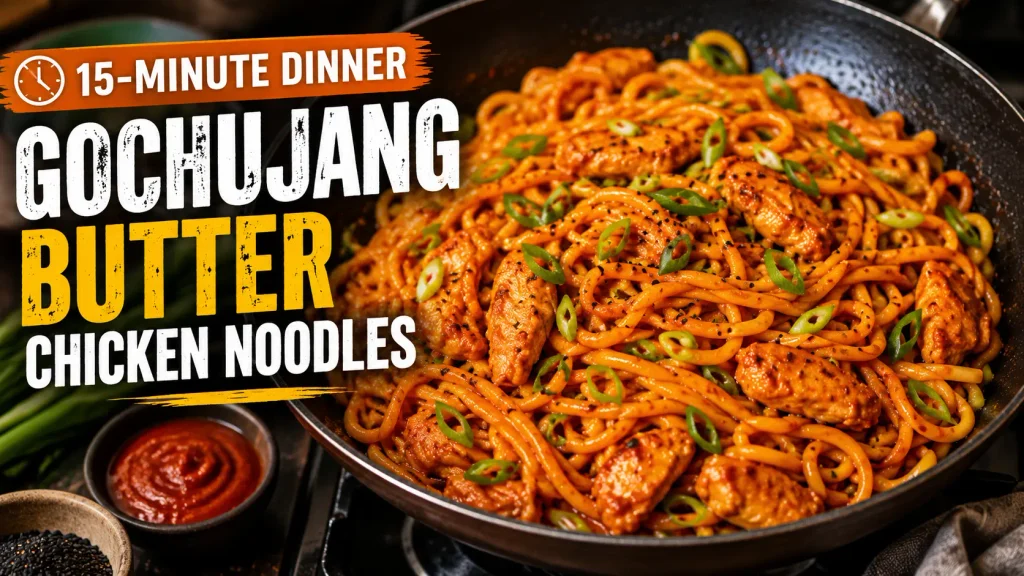
Some nights call for something that feels indulgent without asking much of you. This gochujang butter chicken noodles recipe is exactly that — chewy udon, tender chicken, crisp stir-fry vegetables, and a glossy, spicy-sweet Korean-inspired sauce, all done in about fifteen minutes with barely any cleanup.
The trick is gochujang — Korean fermented chili paste that brings heat, sweetness, and real depth all at once. Combined with butter, toasted sesame oil, honey, and fresh ginger, it turns into a silky sauce that clings to every strand of noodle. Here’s exactly how I make it.
What You’ll Need (serves 2)
- 1½ tablespoons gochujang chili paste
- 20g salted butter
- ½ teaspoon clear honey
- 1 tablespoon toasted sesame oil
- 20g fresh ginger, peeled and finely grated
- 300g ready-prepared stir-fry vegetables (cabbage, peppers, carrots, broccoli, beansprouts — whatever mix you like)
- 2 x 150g packs udon noodles
- 2 fillets cooked chicken breast, skin removed, cut into bite-sized pieces
- ½ teaspoon black sesame seeds
How to Make It
1. Prep everything first.
Peel and grate the ginger, cut the cooked chicken into bite-sized pieces, and have your vegetables and noodles within reach — this recipe moves fast once it starts, so having everything ready matters.
2. Melt the butter and bloom the ginger.
Heat a large frying pan or wok over medium-high heat. Add the butter and let it melt, then stir in the grated ginger and cook briefly, just until it turns fragrant.
3. Build the sauce.
Add the gochujang, honey, and toasted sesame oil to the pan, stirring until you have a smooth, vibrant, glossy sauce.
4. Cook the vegetables.
Add the stir-fry vegetables and cook until they start to soften while still keeping some crunch — this is what gives the finished dish texture instead of turning everything uniformly soft.
5. Add the noodles.
Add the udon noodles and toss everything together, letting the noodles warm through as they soak up the spicy butter sauce.
6. Add the chicken.
Add the bite-sized chicken pieces and toss again until everything is hot and evenly coated in sauce.
7. Serve.
Divide between two bowls and finish with a scattering of black sesame seeds.
What It Actually Tastes Like
The first thing you notice is the savory richness from the butter and sesame oil, followed by the fermented chili flavor from the gochujang and a gentle sweetness from the honey. Fresh ginger adds warmth underneath it all, while the vegetables bring freshness and crunch. It’s spicy without being overwhelming, and the heat level is easy to adjust up or down to taste.
Tips for Getting It Right
Don’t treat the sesame oil as just a garnish — it’s doing real work in the sauce itself. Avoid overcooking the vegetables; a little bite makes the whole dish more interesting. Using already-cooked chicken (leftover roast chicken works great) is what keeps this a genuine 15-minute meal. Toss the noodles thoroughly so every strand gets coated rather than letting sauce pool at the bottom of the pan, and taste the sauce before committing — gochujang brands vary in heat, so start conservative if you’re spice-sensitive.
Easy Variations
Add sliced mushrooms, shredded cabbage, spring onions, or extra broccoli for more vegetables. Swap the chicken for cooked prawns, shredded turkey, tofu, or thin-sliced beef. For more heat, add fresh chili or a pinch of chili flakes; for crunch, finish with crushed peanuts or cashews alongside the sesame seeds.
What to Serve Alongside
These noodles work well with crispy dumplings, steamed greens, edamame, cucumber salad, or quick pickled vegetables. The sauce itself doubles as a dipping sauce for dumplings or a drizzle for chicken wings — once you’ve made a batch, you’ll likely find reasons to use it elsewhere.
Storage
Store leftovers in an airtight container in the fridge. When reheating, add a small splash of water to loosen the sauce, since the noodles tend to absorb moisture as they sit. Best enjoyed within a couple of days.
Why This One Earns a Permanent Spot on Busy Nights
What makes this dish worth keeping in rotation isn’t complexity — it’s that it delivers real depth of flavor from a short, approachable ingredient list in barely any time at all. Rich, spicy, a little sweet, and genuinely satisfying, it’s the kind of dinner that solves the “hungry and short on time” problem without any compromise on flavor.