
The Dressing That Made Me Stop Buying Bottled Vinaigrette
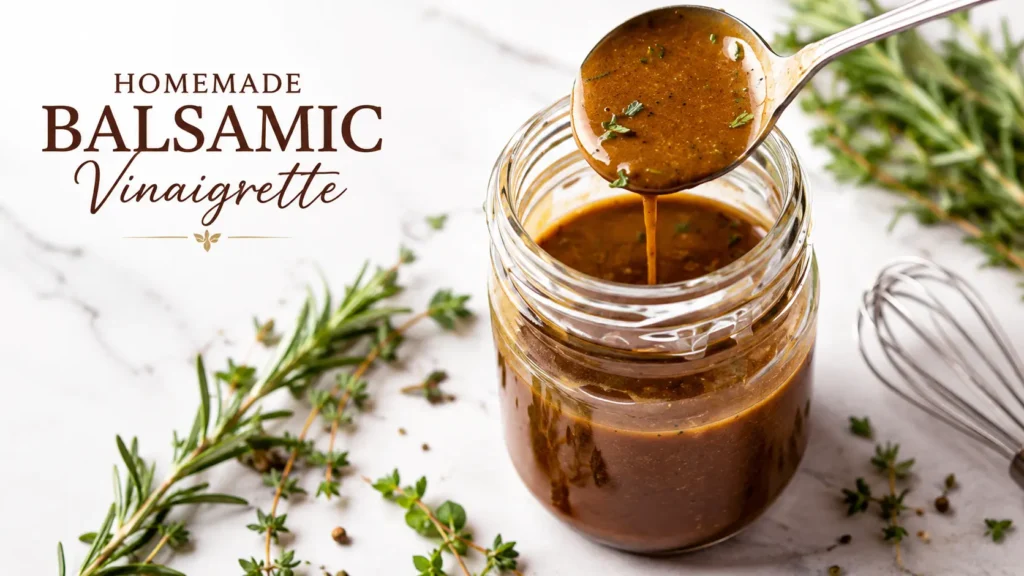
Restaurant salads usually taste better for one specific reason, and it’s rarely the lettuce — it’s the dressing. Once you make your own balsamic vinaigrette from scratch, you get complete control over every part of the flavor, and honestly, it’s hard to go back to a bottle after that.
There’s also something satisfying about making a dressing yourself — no artificial preservatives, better ingredients, more control over sweetness, and a fresher taste than anything you’d find on a shelf. Here’s exactly how I make it.
What You’ll Need
- 2 tablespoons honey
- 1 tablespoon Dijon mustard
- ½ teaspoon fine sea salt
- ½ teaspoon freshly ground black pepper
- 1 large garlic clove, minced
- ¼ cup balsamic vinegar
- ¾ cup extra virgin olive oil
Yield: approximately 20 tablespoons of dressing
How to Make It
1. Build the flavor base.
Add the honey, Dijon mustard, salt, pepper, garlic, and balsamic vinegar to a mixing bowl and whisk thoroughly. Don’t rush this stage — the honey and mustard need time to start dissolving into the vinegar before the oil goes in.
2. Add the oil slowly.
Whisking continuously, pour in the olive oil in a slow, steady stream rather than all at once. This gradual addition is what creates proper emulsification, giving you a smooth, cohesive dressing instead of one that separates immediately.
3. Keep whisking.
Continue until the dressing looks smooth and slightly thickened — this is what gives it that silky texture that actually clings to salad greens instead of pooling at the bottom of the bowl.
4. Taste and adjust.
Want it sweeter? Add a touch more honey. Need more tang? A little extra balsamic vinegar does the job.
5. Store it properly.
Transfer to a glass jar, seal tightly, and refrigerate. Give it a good shake before each use.
What Actually Makes This Taste Better
Most people focus purely on the recipe, but ingredient quality is the real differentiator. A traditional, aged, or organic balsamic vinegar naturally carries more depth and sweetness than a basic bottle. Fresh extra virgin olive oil makes a noticeable difference too — an oil that’s gone stale can undermine the whole dressing. And fresh garlic, rather than the pre-minced jarred kind, adds an aromatic intensity that’s genuinely hard to replicate.
An Oil-Free Version
If you’re looking to cut the fat content, this works surprisingly well:
Ingredients:
¼ cup balsamic vinegar · 2 tablespoons honey · 1 tablespoon Dijon mustard · 2 tablespoons water · 1 teaspoon garlic powder · salt and pepper
Whisk everything together until smooth — the mustard acts as a natural thickener here. It won’t taste identical to the oil-based version, but it delivers real flavor with a fraction of the fat. A spoonful of Greek yogurt stirred in adds extra creaminess without needing any oil at all.
Flavor Variations Worth Trying
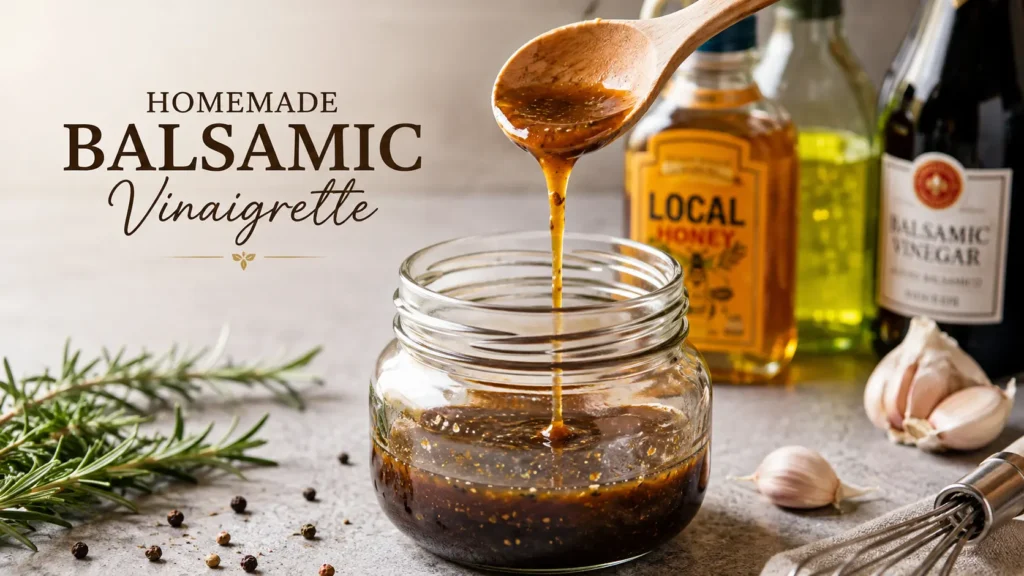
Honey balsamic:
add an extra tablespoon of honey — excellent with strawberries, apples, or pears.
Maple balsamic:
swap the honey for maple syrup — especially good on roasted vegetables or sweet potato salads.
Berry balsamic:
stir in a few crushed raspberries for something unexpected and memorable.
Citrus balsamic:
add orange zest and juice for a brighter, more refreshing finish.
Salads That Pair Well
Spinach and strawberry — the sweetness of the berries balances the vinegar’s acidity nicely. Apple walnut — crunchy, sweet, and tangy all at once. Goat cheese salads — the creaminess softens the vinegar’s sharper edges. Grilled chicken salads — adds protein while letting the dressing shine. Mediterranean salads — tomatoes, cucumber, and olives all play well with balsamic.
If you enjoy light, refreshing salads, my High Protein Cucumber Dill Salad is another great recipe to try. It combines crisp cucumbers with a creamy Greek yogurt and fresh dill dressing for an easy high-protein side dish that’s perfect for warm days or a quick healthy lunch.
Storage Notes
Because vinegar is naturally acidic, this dressing keeps well in the fridge. Store it in an airtight container and shake before each use. If you notice the oil and vinegar separating over time, that’s completely normal — it’s actually a sign you made a real homemade dressing rather than something stabilized with additives. Letting it sit at room temperature for about 10 minutes before serving also helps bring back the best texture.
Common Mistakes to Avoid
Adding the oil too quickly, which results in poor emulsification. Overdoing the honey, which can flatten the vinegar’s natural complexity. Skipping the salt, which does more than season — it actually enhances every other flavor in the mix. Using lower-quality ingredients, since you can’t get an extraordinary dressing from mediocre ones. And skipping the taste-test along the way — a recipe is a starting point, but your own palate is the final call.
Why This One Is Worth Keeping Around
What makes a really good balsamic vinaigrette worthwhile isn’t just the flavor — it’s the flexibility. One small jar can dress leafy greens, roasted vegetables, grilled chicken, wraps, grain bowls, and even fresh fruit. It’s also proof that genuinely great results usually come from mastering a few simple ingredients rather than chasing anything complicated. A few pantry staples, five minutes, and a whisk go a long way — and once you’ve tasted the difference, it’s hard to reach for a bottle again.