
The Watermelon Sorbet Recipe That Replaced Ice Cream
Cutting calories in summer has one specific cruelty to it: it’s exactly when you want ice cream the most. I’d tell myself I’d just skip it entirely while trying to stay in a deficit, and that worked for about a week before I was standing in front of the freezer aisle anyway, annoyed that “eating healthy” seemed to mean giving up the one thing that actually felt good on a hot day.
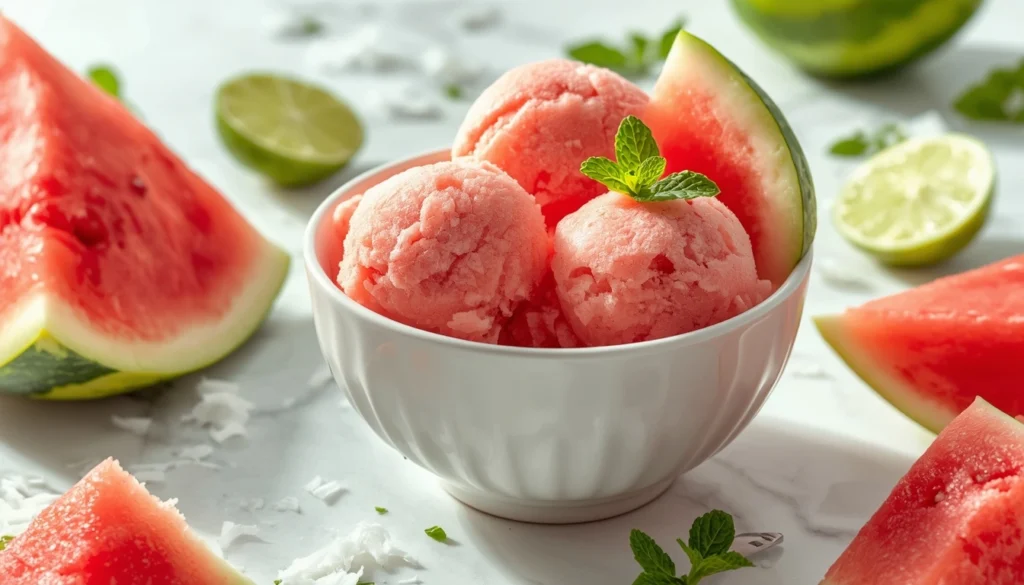
What ended that standoff was watermelon — frozen solid, then blended with a splash of coconut cream and lime until it turned into something that looked and scooped exactly like sorbet. I wasn’t expecting it to actually satisfy the ice cream craving. It did. Cold, creamy, sweet without being cloying, and nowhere close to the calorie count of the real thing.
This has become my answer every time summer heat meets a calorie deficit — not a sad substitute, but something I genuinely want. The technique matters more than the ingredient list here, so I’ll walk through exactly where people usually go wrong and how to avoid it.
What You’ll Need
- 3 cups frozen watermelon
- ¾ cup coconut cream
- Juice of 1 lime
- 2 tablespoons shredded coconut
How to Make It
1. Freeze the watermelon properly
this decides everything. Cut the watermelon into small, evenly sized cubes and remove any seeds. Spread them in a single layer on a parchment-lined tray and freeze until completely solid — several hours minimum, overnight is better. This is the step that makes or breaks the texture: if the fruit isn’t fully frozen, the sorbet turns watery instead of thick and scoopable.
2. Prep everything before you start blending.
Once the watermelon is frozen, work quickly so it doesn’t start melting. Measure out your frozen watermelon, coconut cream, and lime juice. If your coconut cream is rock-hard from the fridge, let it soften just slightly. Chilling your serving bowl in the freezer for a few minutes beforehand is a small optional touch that helps the sorbet stay cold longer once served.
3. Add ingredients to the blender in order.
Frozen watermelon goes in first, followed by the coconut cream and lime juice. The watermelon is the icy base, the coconut cream adds richness that balances that iciness, and the lime keeps the flavor bright instead of muted — frozen watermelon can taste a little flat on its own. Keep the ingredient list this simple; it’s what makes the final texture clean.
4. Blend slowly and be patient.
It will look chunky and crumbly at first — that’s completely normal. Blend in short pulses, scraping down the sides regularly, and resist the urge to add liquid too soon. Rushing this step with extra liquid turns the texture slushy instead of creamy. Give it time to come together gradually.
5. Adjust consistency carefully.
As it blends, the mixture should shift from icy chunks into something thick, soft, and creamy. If it’s too thick to move, add coconut cream a small spoonful at a time — watermelon already has plenty of water, so more liquid than that risks a loose, runny texture. If it starts looking too soft, stop blending immediately; that means the fruit has started melting.
6. Taste before serving.
Frozen desserts often taste less sweet once chilled, so give it a taste. If it’s balanced, leave it as is. Too mild? A touch more lime brightens it. Want it sweeter? Add the smallest amount of sweetener necessary — this recipe works best when the flavor stays clean and fruity rather than overcomplicated.
7. Serve immediately for the best texture.
The sorbet is at its absolute best right after blending — cold, smooth, and slightly fluffy. Spoon it into a chilled bowl, shape it into a neat scoop if you like, and top with a little shredded coconut for texture and presentation.
8. Freeze briefly if you want it firmer
but don’t overdo it. If it feels a bit soft, 10–20 minutes in the freezer firms it up nicely. Don’t leave it much longer than that; without the fat and sugar content of real ice cream, watermelon freezes rock-hard and icy over time. This is a fresh-eaten treat, not a make-ahead one.
9. If leftovers freeze too hard, don’t panic.
Let it sit at room temperature for a few minutes to soften, then blend briefly again if you want the creamy texture back. This is just how frozen fruit behaves — not a sign anything went wrong.

Nutrition, total batch (2–3 servings): 220–260 kcal · 30–40g carbohydrates · 25–35g sugar · 10–15g fat · 1–2g protein
Per serving (~1 bowl, 3 servings): 75–90 kcal · 10–13g carbohydrates · 8–12g sugar · 4–6g fat · 0–1g protein
Why This Actually Works as a Diet-Friendly Treat
This isn’t just “fewer calories than ice cream” — it’s a dessert built almost entirely from ingredients doing something useful. Watermelon’s high water content means real hydration, which matters more in summer heat than most desserts ever account for, plus a solid dose of vitamin C that supports recovery and immunity. Because it’s light rather than rich, it doesn’t leave you with that sluggish, overly-full feeling a lot of cream-based desserts do — you can actually enjoy it and move on with your day.
The coconut cream is doing quiet work too: a bit of healthy fat is often what separates a dessert that satisfies you from one that just adds sugar and leaves you wanting more. It’s enough to make this feel indulgent without pushing the calorie count anywhere close to traditional ice cream.
And maybe the simplest reason it’s stuck around: it’s made from ingredients you can actually name. No stabilizers, no long ingredient list, nothing to overthink — just fruit, a little cream, and citrus. If you’ve been trying to stay disciplined through summer without giving up the thing you actually crave, this is the fix. Not a compromise — the real thing, just built smarter.